Credits FAQ

The Tax Collector's Office by Pieter Brueghel the Younger (c. 1615)
Usage of Rowan is tracked based on credits. Free-tier accounts can use 20 credits per week, while Rowan subscribers have substantially more credits (2,000 per week for Team subscribers, and 35,000 or more for organizations).
For new users, understanding Rowan's credit system can take a little getting used to: how do credits work, why does Rowan track usage this way, and how do these numbers translate into real-world workflows? In this article, we'll explain how Rowan's credit usage works and what it means in practice.
How Do Credits Work?
Every time you run a calculation, you'll use credits, similar to cell-phone minutes or a class pass at a gym. Jobs running on CPU machines charge 1 credit per minute. Jobs running on GPU machines charge 3 credits per minute or 7 credits per minute when using H100 or H200 GPUs (reflecting their higher cost).
| Hardware | Credits/Minute |
|---|---|
| CPU only | 1 |
| Non-H100/H200 GPUs | 3 |
| H100/H200 GPUs | 7 |
Each account receives a set number of credits that refresh on a regular schedule. You can also purchase additional credits at any time if needed. Your current balance is always visible, and you can optionally set up a "Credit Balance Warning" in your account settings to be notified before your credits run out.
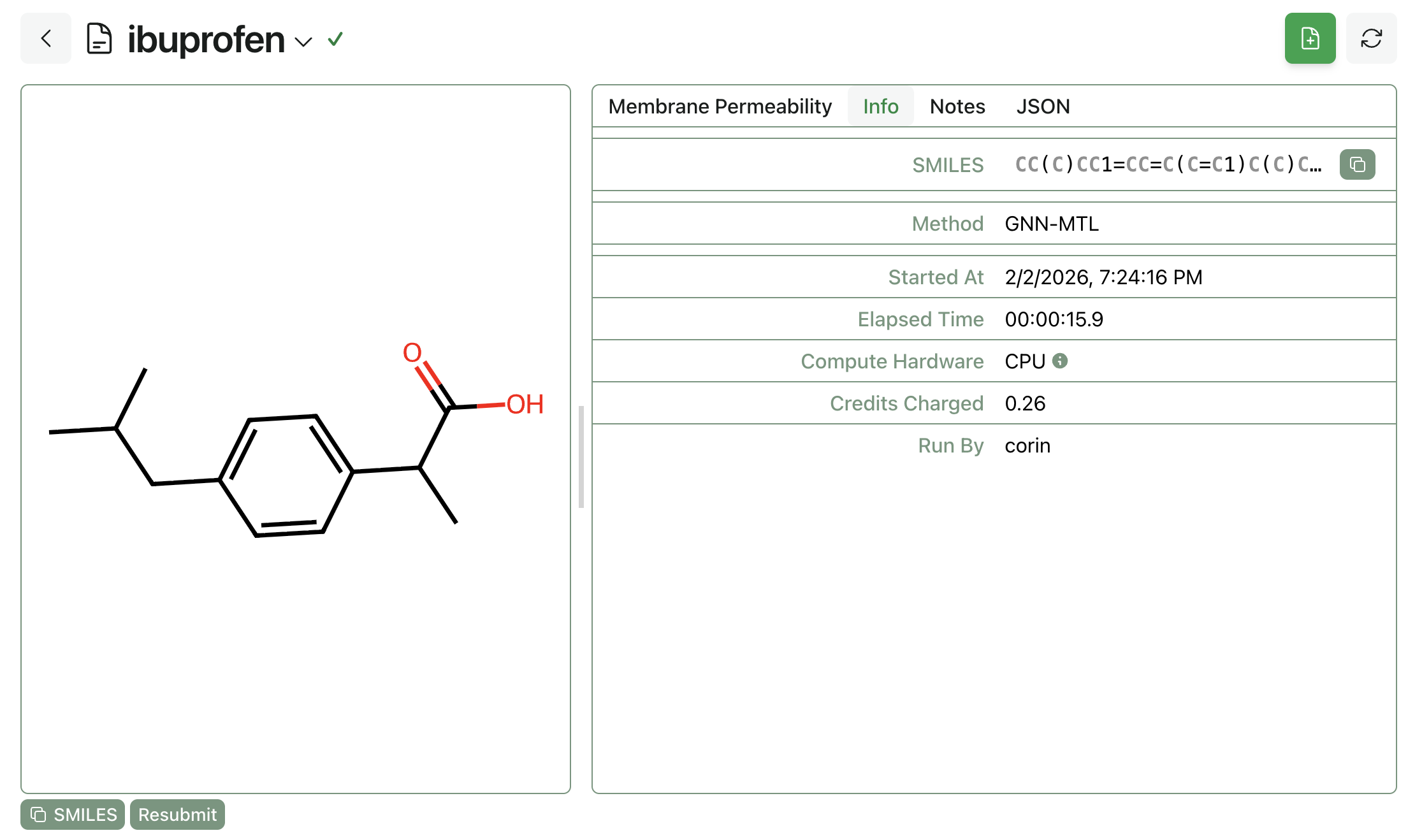
Rowan workflows update every few seconds while running. The total number of credits charged can be viewed in the "Info" tab of the workflow:
Viewing Your Credit Balance
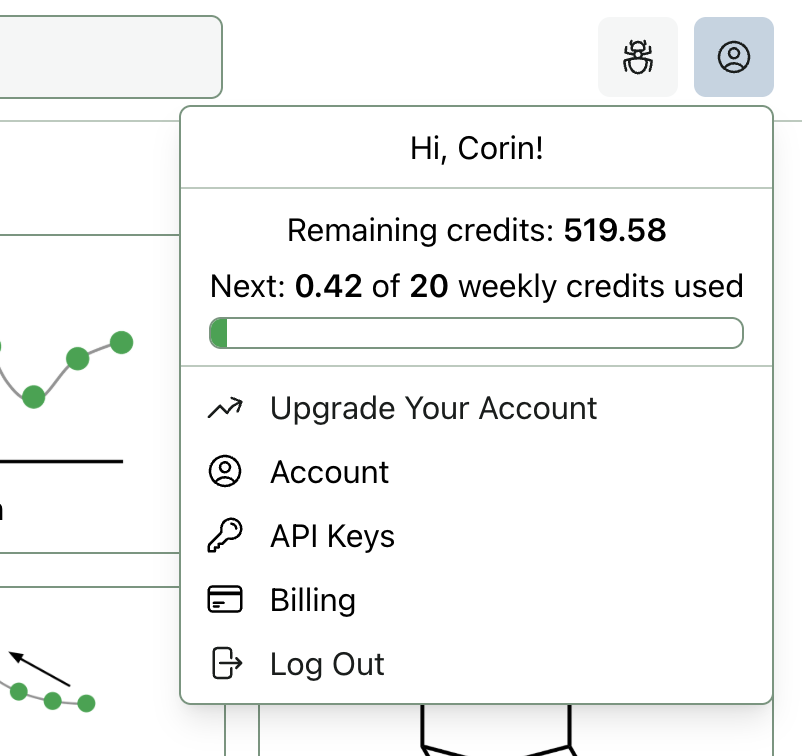
Your remaining credit balance can be viewed on Rowan's billing page or under your account information in the top-right corner of the app:
Weekly and Purchased Credits
We offer two types of credits: weekly credits and purchased credits.
- Weekly credits are included with your subscription and refresh each week. They do not roll over.
- Purchased credits can be bought at any time and remain valid for up to one year from the purchase date.
All credit purchases are final and non-refundable.
When Do Weekly Credits Refresh?
Weekly credits are issued on a rolling weekly cycle, running from Sunday at 12:00 a.m. through Saturday at 11:59 p.m. At the start of each new week, your balance refreshes according to your subscription.
What Happens if I Run Out of Credits?
If your balance reaches zero, any active jobs will stop, and you won't be able to submit new jobs until credits are available again. Jobs stopped due to insufficient credits cannot be resumed.
Setting a Credit Balance Warning
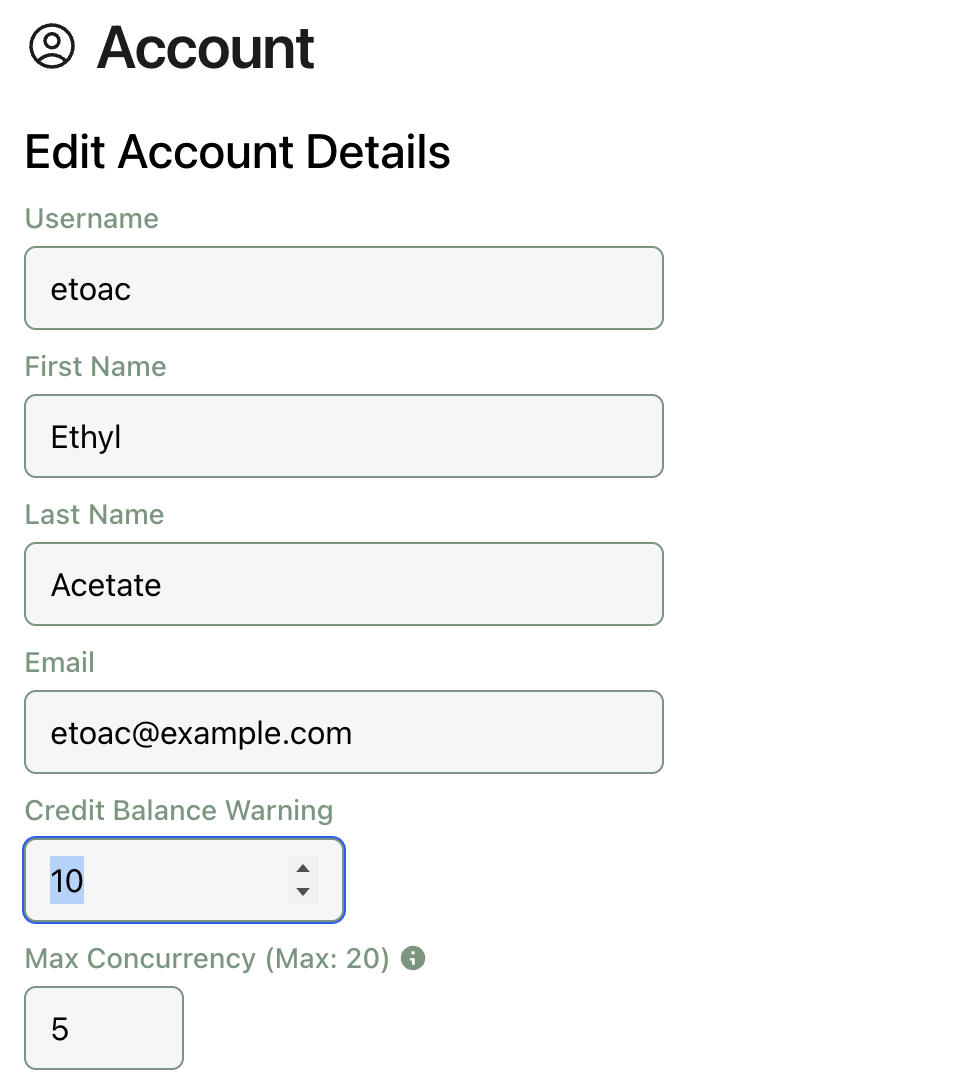
Users with low credit balances receive a warning email. You can customize when this happens by adjusting the "Credit Balance Warning" on your account page:
If you'd like to enable overages to prevent jobs from being interrupted, please reach out to our team at contact@rowansci.com.
Why Does Rowan Use Credits?
Traditional computational chemistry packages operate through a license-fee model: customers purchase a license for some number of years, receive a copy of the software, and are then responsibile for provisioning computational resources (either physically or in the cloud) to run their calculations. This adds a lot of complexity for the end user: scientists must not only learn how to run the software but also how to manage compute clusters and data transfer at scale. At Rowan, we believe all of this complexity should be internal to the product so that we can provide a streamlined and reliable experience to our users. That's why we manage running and storing all computations—we select and configure the best available resources to run workflows in a swift and cost-effective manner at scale.
This model makes a fixed license fee impossible, however. Computational chemistry is a notoriously expensive field, as we've written about before, and running lots and lots of calculations can easily lead to thousands of dollars of cloud expenses (or more). Tracking usage through credits helps us to be transparent about how much things cost and allows our users to make informed choices about "fast and cheap" versus "slow and accurate" predictions.
How Many Credits Do Workflows Cost?
Some workflows are quite predictable:
- Multiple-sequence-alignment (MSA) workflows typically take 0.2 credits.
- Membrane-permeability predictions typically take 0.4 credits.
- Descriptor calculations typically take 1.5 credits.
- ADMET predictions typically take 0.15 credits.
- Solubility predictions typically take about 1 credit.
Some other workflows have variable but somewhat predictable runtimes:
- Simple docking calculations typically take around 1–3 credits, depending on the settings employed (box size, exhaustiveness, number of poses, whether pose refinement is run, and so on).
- Protein co-folding calculations typically take around 10 credits, but this depends on the size of the protein in question, whether affinity predictions are run, and so on.
- Molecular dynamics (MD) simulations typically take roughly 15 credits per nanosecond of MD, but this too depends a lot on the system and settings employed.
Other workflows are much more unpredictable. Workflows involving electronic-structure calculations, geometry optimization, or conformational searching tend to have strong per-structure runtime dependence, meaning that we can't easily predict how long they'll take. For these cases, we recommend running small test calculations first to understand how long your particular systems will take to run.
What if I Need More Credits?
If you have frequent computational needs, a subscription is usually the most cost-effective way to use Rowan. Subscriptions provide a predictable weekly supply of credits, so you can focus on your research rather than usage management. Team subscribers receive 2,000 credits per week while organizations get significantly more. Full plan details are available here.
If you prefer pay-as-you-go access, you can purchase credits through Rowan's billing page for $0.04 per credit. Purchased credits expire one year after purchase.
Rowan's plans are designed to accommodate most users' needs, but every scientific task is different. If the default Rowan subscription plans don't have enough credits for your scientific needs, reach out to our team!